Two policemen hurt in protest rally
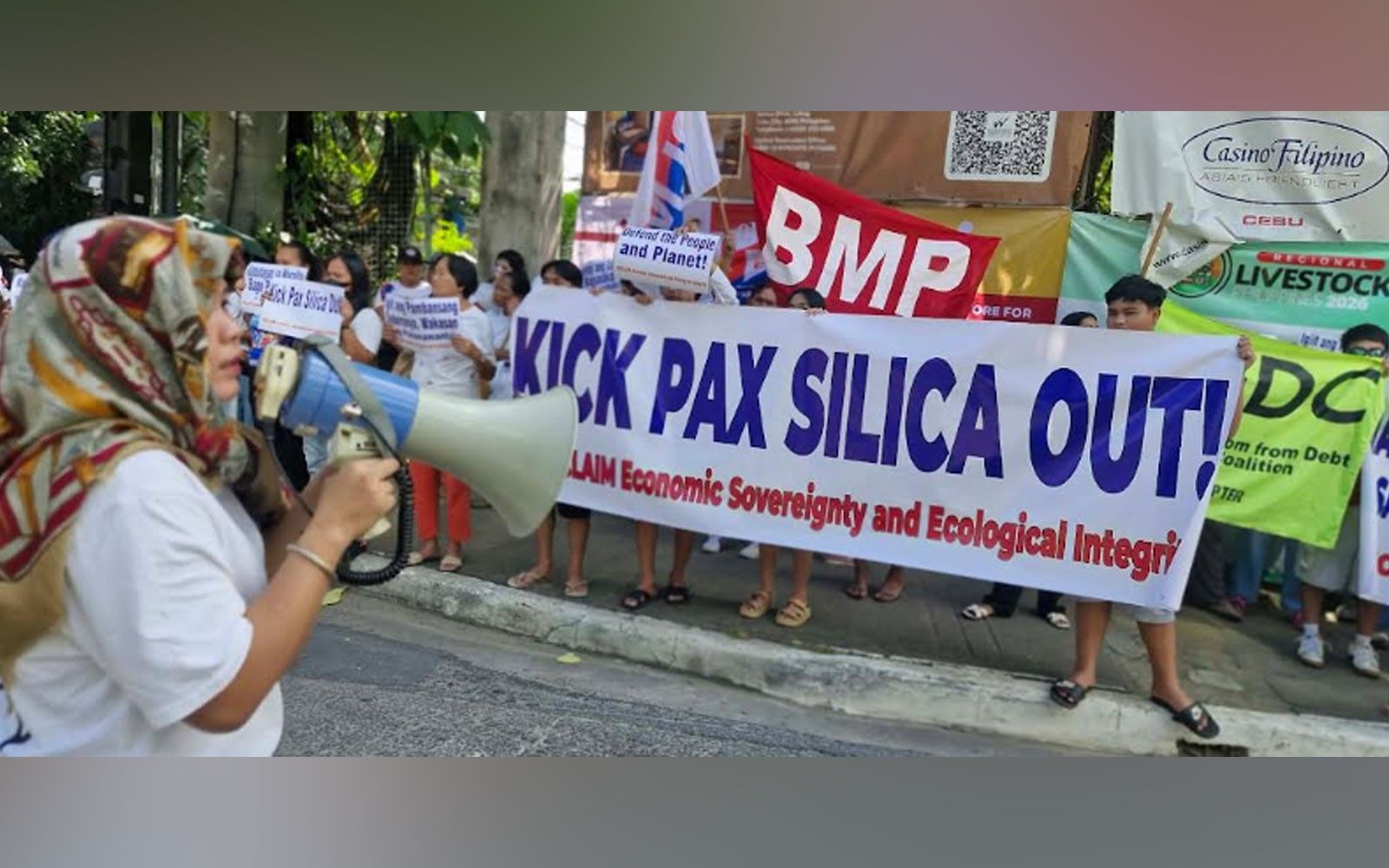
CEBU, Philippines — Two policemen were injured after an illegal protest staged by progressive groups turned chaotic along Colon Street in Cebu City on Monday, November 16, as opposition to the proposed Pax Silica initiative and the visit of United States President Donald Trump spilled onto the streets.
The Cebu City Police Office (CCPO) said around 450 protesters composed of militant groups and student activists joined the demonstration, which lasted from 9 a.m. to 12 noon.
In a statement, the CCPO said the rally proceeded without a permit from the local government. However, police exercised maximum tolerance and allowed the activity to continue in recognition of the protesters’ constitutional rights to freedom of expression and peaceful assembly.
However, tension escalated when protesters burned an effigy despite an earlier agreement not to do so.
Police said the burning posed a safety risk because electrical wires were directly above the area. They also cited an alleged violation of Batas Pambansa Blg. 880, or the Public Assembly Act of 1985.
When police asked the protesters to stop the activity, some participants became aggressive and started attacking the law enforcers. Personnel from the Cebu City Disaster Risk Reduction and Management Office (CDRRMO) tried to extinguish the fire, but one protester allegedly wrestled with an official in an attempt to seize the fire extinguisher.
Police intervention to restore order led to a commotion, leaving two policemen injured. The injured cops were identified as Patrolman Ryan Jasper Anatan and Patrolman Gerald De Lima who were both members of the Crowd Dispersal Management (CDM) team of CCPO.
The CCPO said it had launched an investigation to identify those responsible for the effigy burning, the injuries and the disruption of public order. It warned that appropriate charges would be filed against those found to have violated the law.
The city police office reiterated its respect for the people's constitutional rights but stressed that it would enforce the law through proper legal procedures.
The protest, organized by Bagong Alyansang Makabayan (BAYAN) Central Visayas and allied organizations, including student groups, began with a march from Fuente Osmeña before culminating in a rally along Colon Street.
Videos circulating on social media showed a confrontation involving protesters, police officers and emergency responders after authorities attempted to stop the effigy burning.
Progressive groups disputed the police account, accusing authorities of violently dispersing a peaceful assembly and using excessive force against demonstrators.
In a social media statement issued hours after the incident, Cebu City Councilor Dave Tumulak appealed for dialogue between rally organizers and authorities to prevent similar confrontations.
"I fully believe in freedom of speech, and I also understand the role of our Philippine National Police," Tumulak said.
He urged organizers and authorities to establish clear parameters before demonstrations to ensure peaceful and orderly conduct, stressing that no one should be hurt while exercising democratic freedoms.
Councilor Pastor “Jun” Alcover, meanwhile, warned young protesters against what he described as recruitment efforts by leftist organizations.
Alcover, who has publicly identified himself as a former communist rebel, said students have historically become victims of the country's armed insurgency. He also questioned what he viewed as the selective criticism of the United States, the Armed Forces of the Philippines and the Philippine National Police while remaining silent on issues involving China and the West Philippine Sea.
Progressive groups have repeatedly denied allegations linking their lawful protest activities to the armed insurgency.
Pax Silica concerns
The rally was part of a nationwide mobilization opposing Pax Silica, a proposed US-led initiative aimed at securing supply chains for artificial intelligence, semiconductors, critical minerals and other strategic technologies.
The Philippine component includes plans for a 1,620-hectare advanced manufacturing hub in New Clark City in Capas, Tarlac.
Although the proposed development is outside Cebu, it has drawn criticism from environmental advocates, labor groups and activists concerned about its potential impact on natural resources, energy demand, the environment and national sovereignty.
In a separate statement, BAYAN-7 warned that the proposed agreement between the Philippines and the United States could expose the country's natural resources, including those in Cebu, to further foreign exploitation.
The group said promised investments, jobs and technological advancement should not come at the expense of national sovereignty and the welfare of Filipinos.
BAYAN-7 warned that the Philippines could be reduced to a supplier of raw materials and cheap labor for foreign corporations instead of developing its own industries and technological capabilities.
“Ang pangutana, kinsay tinuod nga makabenepisyo niini nga kasabutan? Ang katawhang Pilipino ba, hilabi na ang mga Sugboanon, o ang mga dagkong korporasyon ug imperyalistang interes sa Estados Unidos?” said BAYAN-7 chairperson Jaime Paglinawan.
Paglinawan cited Cebu's experience with the extraction of dolomite in Alcoy for the Manila Bay rehabilitation project as an example of how local resources could be used for projects benefiting communities outside their source.
He warned that rising demand for critical minerals could put the country's mineral reserves, land, water and energy resources at risk.
The group also raised concerns about the potential effects of resource extraction on agricultural lands, forests, water sources and community livelihoods.
It questioned whether the proposed investments would provide decent wages, secure employment, technology transfer and stronger domestic industries or further deepen the country's dependence on foreign capital and technology.
BAYAN-7 said workers, farmers, fisherfolk and local communities could bear the consequences of displacement and environmental destruction.
It urged Cebuano communities and various sectors to unite in protecting the country's natural resources and called on the Marcos administration to reject the proposed agreement and stop negotiations and commitments that could open strategic industries and resources to US interests.
“Dili konsultasyon ang atong panawagan kon dili ang hingpit nga pagsalikway niini nga kasabutan. Dili nato kinahanglan ang kasabutan nga magpalalom sa pagpahimulos sa atong nasudnong rekurso ug maghigot sa atong ekonomiya sa interes sa Estados Unidos. Ihunong, isalikway, ug ibasura ang Pax Silica,” Paglinawan said.
The controversy over Pax Silica had also reached Cebu City Hall, where Mayor Nestor Archival faced criticism over remarks concerning the city's preparations for an artificial intelligence-driven economy.
Archival later clarified that his statements had been misinterpreted and should not be construed as an endorsement of Pax Silica.
He stressed that Cebu City had made no official endorsement of the project and that any major investment proposal affecting the city would undergo public consultation, environmental review and legal evaluation. — (FREEMAN)




- Latest