Tourism training budget scrutinized
CEBU, Philippines — An increase in tourism training budget for 2027 has drawn scrutiny from the members of the Cebu Provincial Board, who questioned the Provincial Tourism Office on the need for additional funding and whether the same workers would undergo repeated training.
The tourism office is seeking P11 million for training next year, up from its current P7-million allocation. During the 2027 budget deliberations, board members raised concerns over the increase, particularly after learning that the office had conducted 31 training programs this year.
Board Member Celestino “Tining” Martinez III questioned the need for additional funding, noting that the current year's allocation had yet to be fully spent.
“The reason why I'm asking is we already spent P7 million this year, and then wa nato matiwas and then we're asking for P11 million for trainings. So are these going to be the same people that we're going to train for next year?” Martinez asked.
Tourism office head Rowena Montecillo explained that the higher allocation would fund a ladderized training program under a proposed training passport system, allowing tourism workers to progress to more advanced courses rather than repeatedly taking basic training.
She said the office had identified tourism workers across the province who need further training to improve their skills and qualifications.
“There's going to be a ladderized training for these modules. Although mag balik-balik... It's because they need to level up their capacity or their skills,” Montecillo said.
Some modules would run for 10 days and cover specialized skills, particularly for community-based tourism workers already serving visitors.
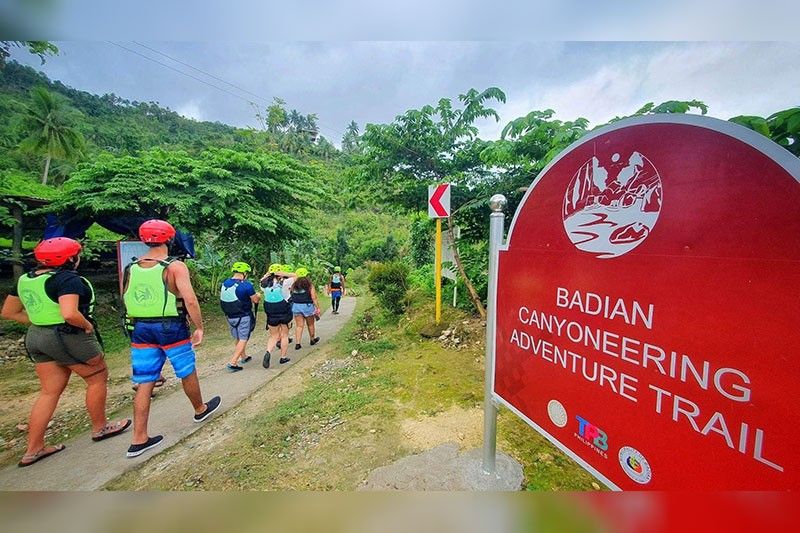
She cited community guides involved in Kawasan Falls and canyoneering activities as among those who would receive advanced training to improve their capabilities.
Asked whether the expenses would cover Capitol employees or tourism workers outside the provincial government, Montecillo said the beneficiaries would primarily be tourism frontliners in various communities.
“These are our frontliners,” she said, citing mountain, cave, canyoneering, waterfall and trail guides as among those targeted for training.
Montecillo said some communities had requested retraining after the present administration assumed office in July 2025, prompting the PTO to accommodate requests from different towns.
Martinez also asked how participants were selected and whether the guides were accredited by the provincial government or their respective municipalities.
Montecillo said local government units (LGUs) identified the guides, some of whom had previously undergone Department of Tourism (DOT) training and secured accreditation.
The proposed program would also include water rescue modules to strengthen the safety skills of tourism workers, particularly those involved in adventure tourism.
Board Member Red Andrei Duterte, chairman of the Committee on Tourism, defended the increase, likening the proposed advanced courses to pursuing a higher degree.
“This year the training were... if we compare it to university it's like a Bachelor's degree pero this 2027 kay masters na,” Duterte said.
He stressed that regular training was essential for adventure tourism guides, particularly those assigned to waterfalls and canyoneering activities, to ensure they retained their knowledge of basic safety procedures.
Duterte said the province's training efforts had largely focused on southern Cebu, particularly following disasters that underscored the need to strengthen tourism stakeholders' capabilities. He hoped the higher allocation would allow the PTO to extend its programs to northern Cebu.
However, Board Member Paz Rozgoni warned against excessive training in some destinations, citing the growing number of guides involved in snorkeling and diving activities in Moalboal.
She said the municipality had experienced several snorkeling and diving accidents, while the number of sardine-run guides had reportedly exceeded 300.
She also raised concerns that competition had divided guides into separate groups, affecting coordination among tourism workers and potentially disrupting marine reefs.
“I hope kung duna tay training sa atong side again, makapangutana kos akong side especially in Moalboal kay na misuse na ang atong training,” Rozgoni said.
Montecillo said the PTO had turned down a training request from the Moalboal tourism office to prevent an oversupply of trained guides.
“The tourism office of Moalboal requested for a training but we declined. Because we want to have a proper number, we don't want to exceed,” she said.
Aside from training, the PTO is seeking higher allocations for planning and research, promotional materials and other tourism-related activities.
Montecillo said the office intends to complete the province's 10-year Provincial Tourism Master Plan. Initial focus group discussions have already been conducted in partnership with academic institutions, including Cebu Normal University.
The PTO is also proposing data interpretation training for municipal tourism officers to improve their ability to understand and analyze tourism statistics.
It likewise plans to increase spending on promotional materials. The office currently maintains two promotional counters at the Mactan-Cebu International Airport, catering to domestic and international travelers.
The proposed PTO allocation forms part of the Cebu Provincial Government's P14.6-billion budget for 2027, up 22.7 percent from this year's P11.9-billion budget. — /FPL (FREEMAN)





- Latest