A renewal of vows
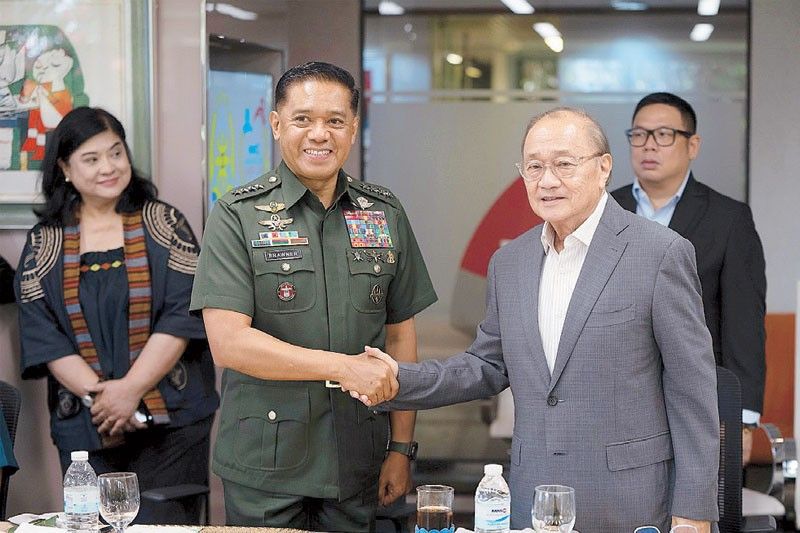
This was a marriage that was made in heaven, so to speak.
To the groom, the Armed Forces of the Philippines or AFP, we owe a debt of gratitude for standing watch over our territories, especially during these volatile geopolitical times.
To the bride, ourselves, we manifest that debt of gratitude in something more immediate and more human; in this case, the assurance that when a member of the AFP falls ill or is wounded in the line of duty, the very best of medical care from the very best medical institution stands ready to receive him.
This assurance, this union, took a firmer shape recently when the AFP and the Makati Medical Center Foundation (MMCF) signed a new, five-year Memorandum of Agreement (MOA) in Makati City, a renewal that both deepens and extends a partnership that has, for well over a decade, quietly transformed the state of military healthcare and medical care in the country.
The relationship between the AFP and MMCF started with an original accord in 2013 centered on the enhancement of the AFP Medical Center. It has been renewed and broadened in the years since, particularly in 2018 and 2021, as the Foundation’s Organizational Strengthening Program expanded its reach from a single flagship facility to dozens of military hospitals and treatment centers nationwide.
Each renewal has told the same story in a different chapter, not as a one-time gesture but as a standing practice of MMCF to the AFP.
The new MOA was signed at the PLDT Head Office in Makati by then-AFP Chief of Staff, Gen. Romeo Brawner Jr. and the MMCF chairman, Manuel V. Pangilinan or MVP. The Foundation’s clinical and institutional leadership, under president Dr. Victor Gisbert and executive director Marge Macasaet Barro, carried the operational weight of translating the MOA’s commitments into actual training slots, rotations, and mentoring hours on the ground.
That the agreement changed hands across AFP leadership transitions, from one chief of staff to the next, while the substance of the commitment only grew, says something about how deeply this arrangement has become embedded in institutional practice rather than personal preference.
Under the renewed pact, MMCF will provide specialized medical training, hospital management expertise, and technical assistance meant to strengthen healthcare delivery across the AFP’s entire medical network. AFP-endorsed doctors and medical personnel will be able to pursue residency and fellowship programs at Makati Medical Center, supplemented by clinical rotations, benchmarking visits to MMC’s facilities, and continuing professional development activities designed for members of the AFP Medical Corps, Nurse Corps, and Medical Administrative Corps.
In effect, the agreement gave individual military health professionals a pathway into world-class clinical training that would otherwise be difficult to access on a soldier’s calendar and budget. It also gave the AFP’s medical system, as an institution, the benefit of MMCF’s organizational know-how.

The five-year horizon set by this MOA is itself a signal of intent, not as a stopgap measure but as a sustained runway for institutional change. Reports around the signing point to an ambition that goes beyond training exchanges alone, an accompanying push to modernize and digitalize the AFP’s medical record-keeping and health-service systems, building on the computerization work that earlier phases of this partnership had already begun.
If that ambition is realized, the coming years should see something more durable than another round of workshops: a military medical system that is measurably more capable of standing on its own, having absorbed, hospital by hospital and cohort by cohort, the discipline and expertise of one of the country’s leading private health institutions.
For an institution such as the AFP, whose members are asked to risk everything, that kind of steady, unglamorous investment is precisely the kind of gratitude that counts.
And, as in all successful marriages, for better or for worse. *


- Latest