DOE assures enough power supply despite Visayas woes
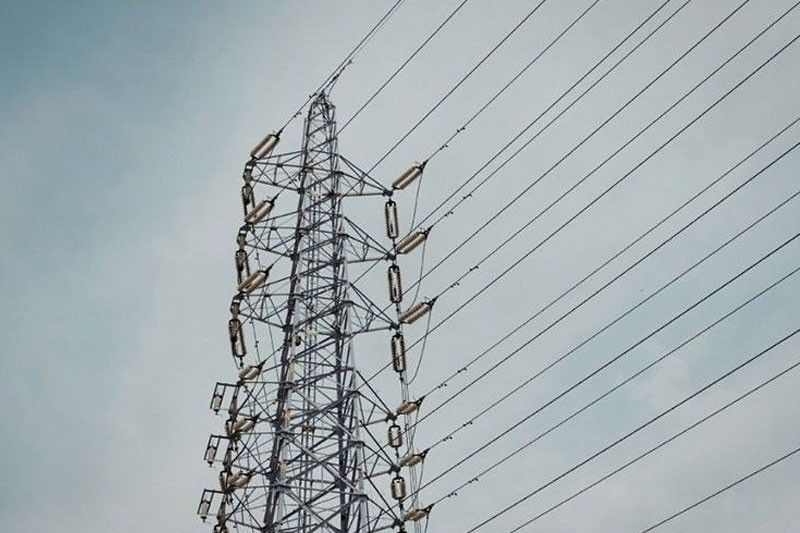
CEBU, Philippines — The Department of Energy (DOE) on Monday assured the public that the country's power supply remains sufficient despite persistent generation constraints in the Visayas, where the agency is pursuing both immediate and long-term measures to strengthen grid reliability.
Speaking during a virtual press briefing, DOE Undersecretary Mario C. Marasigan said Luzon and Mindanao continue to have adequate power reserves, while the Visayas has remained stable through electricity imports from neighboring grids despite several power plant outages.
Marasigan said Luzon has yet to reach its projected peak electricity demand for the year, with the highest recorded demand remaining at 14,534 megawatts on May 28.
For the Visayas, the DOE projects peak demand to reach 2,942 megawatts in Week 32 or by first week of August, although the highest recorded demand so far is 2,779 megawatts. In Mindanao, peak demand is expected to reach 3,038 megawatts by end of July, while the highest recorded demand to date stands at 2,775 megawatts.
He reported that Luzon's actual available supply last week reached 16,113 megawatts, exceeding the forecast of 14,900 megawatts. Actual peak demand reached 13,526 megawatts, slightly higher than the projected 13,014 megawatts.
In Mindanao, actual available supply reached 3,203 megawatts, surpassing the forecast of 3,105 megawatts, while actual peak demand was 2,554 megawatts, below the projected 2,638 megawatts.
The Visayas, however, continued to face generation constraints due to the prolonged outage of Therma Visayas Units 1 and 2 and the derating of several power plants. Although available supply had been forecast at 2,749 megawatts, actual capacity reached only 2,102 megawatts.
Despite the reduced generation, Marasigan said the Visayas grid remained stable through power transfers from neighboring grids, with about 450 megawatts imported from Mindanao and as much as 250 megawatts supplied by Luzon.
To address recurring power supply issues, the DOE has started preparing energy master plans in coordination with government-owned corporations, power suppliers, electric cooperatives, the National Power Corp. (NAPOCOR), National Transmission Corp. (TransCo), local government units and potential investors, including the Maharlika Investment Fund.
Marasigan said master plans for Palawan and Mindoro have already been completed and are now being coordinated with the respective local government units.
The DOE is also prioritizing the formulation of a comprehensive energy master plan for the Visayas to determine the generation capacity needed to make the region more self-sufficient through location-based power generation and ancillary services.
As an immediate response to recurring yellow alerts in the Visayas, Marasigan said the department is targeting to add at least 200 megawatts of additional generating capacity, with the goal of increasing this to 270 megawatts.
He added that the first fast-tracked remedial measures are expected to be operational by the end of July, while additional generating capacities are also being considered before yearend.
Meanwhile, the National Grid Corporation of the Philippines (NGCP) placed the Visayas Grid under Yellow Alert from 5 p.m. to 8 p.m. on Monday, July 13, based on its 2 p.m. advisory.
The grid had an available capacity of 2,602 megawatts against a projected peak demand of 2,376 megawatts.
NGCP reported that eight power plants have been on forced outage this July. Four other plants have remained on forced outage since June, seven since May, one since March, three since 2025, three since 2024, two since 2023, and one since 2021.
Another 14 power plants are operating on derated capacities, resulting in a total of 940.6 megawatts of unavailable capacity in the Visayas grid.
According to NGCP, the Yellow Alert was triggered by the continued unavailability of the Visayas' large coal-fired power plants TVI 1 and TVI 2, the recent outage of PCPC that removed 135 megawatts from the grid, and increased electricity demand.
A Yellow Alert is declared when the operating margin is insufficient to meet the transmission grid's contingency requirement. — (FREEMAN)


- Latest