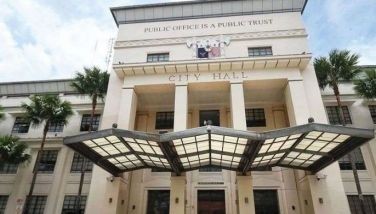
City steps up support for OFWs, PUV drivers
CEBU, Philippines — TU Tuburan intern Lynda Katherine Mecaros UP-Cebu intern
The Cebu City government is stepping up its support programs for workers and transport drivers as global tensions in the Middle East continue to drive up fuel prices and raising concerns over the possible repatriation of overseas Filipino workers (OFWs).
The Middle East crisis began last month with U.S. and Israeli military strikes against Iran, killing key leaders like Supreme Leader Ali Khamenei. This led Iran to close the Strait of Hormuz, severely disrupting global oil supply and causing fuel prices to rise. The conflict escalated when Hezbollah targeted Israel, resulting in Israeli counterstrikes in Lebanon, including Beirut.
International media reports indicate hundreds killed, thousands injured, and over 800,000 displaced in Lebanon. European nations have also sent forces to Cyprus, highlighting the regional impact of the crisis.
Against this backdrop, the domestic scene particularly in Cebu City was jolted with a surge in fuel prices. This prompted Mayor Nestor Archival to convene transport associations last Thursday including taxi, modern jeepney, and traditional jeepney operators, to hear their concerns.
Drivers told the mayor that their daily earnings have been severely affected by the rising cost of gasoline and diesel, while fare rates remain unchanged. This prompted them to seek for possible government assistance.
Gregory Perez, head of the PISTON Cebu Chapter, shared his own experience as a driver. “Sa niaging semana nireklamo sila na gamay na kaayo ug income, wala bya magpa ubos, pipila lang ka operator ang nagpadayag nga mo-os-os ang ilang boundary,” he said, referring to the situation faced by many jeepney drivers.
Perez said the increase in fuel costs has forced some drivers to temporarily stop operating. “Sa usa ka adlaw, sauna mo-budget ko og P1,000 para sa krudo, karon mo-budget na ko og P1,500 para sa parehas nga rota ug oras sa byahe. Mao na ang sitwasyon karon, nisaka na siya og P500 sa krudo lang,” he added, describing how the rising fuel expenses have made it difficult to maintain daily trips.
He also noted that while a few operators have slightly lowered the “boundary,” or fixed daily remittance drivers must pay, the adjustment is minimal and does little to offset higher fuel costs. Some drivers and passengers have resorted to temporary fare adjustments based on mutual agreement, Perez said.
Mayor Archival acknowledged the drivers’ predicament and outlined the city government’s approach to possible assistance. “Ang ilang argabyo na gisulti nako karon, nga naglisod jud sila sa ilang livelihood. Naglisod sila in a sense nga taas kaayo ang krudo ug ang gasolina pero ang ilang plitehan, ang plitehan na ilang gikolekta, mao ra gyud gihapon. Mao ni gisulti nila nga naa kuno’y pronouncement nga wa’y saka plitehan gikan sa LTFRB,” he said.
“Dako ang epekto sa ilang kita ang pagsaka sa presyo sa gasolina tungod sa mga panghitabo sa Middle East, samtang ang pletehan nagpabilin gihapon nga wala mosaka. Gipaminaw nato ang ilang kahimtang aron matan-aw ang mga paagi nga makatabang sa pag-sustain sa ila’ng panginabuhian,” Archival said.
The mayor added that the drivers requested support from the city government. “Nangutana ko unsa nga klase nga tabang. Ang ilang gusto unta nga makahatag ta ug certain subsidy sa ilang pagbyahe — subsidy in a sense nga kwarta nga mapuno sa ilang pagpalit sa krudo. Nakasinabot ‘mi nga mohatag sila og request, mohatag sila og lista sa ilang mga grupo, kay grupo-grupo man ni sila.”
The mayor explained that the city is studying the possibility of providing fuel subsidies to help drivers sustain their operations. He emphasized that any solution must also protect commuters from fare hikes.
To ensure transparency in the process, the city will verify first the list of legitimate drivers with the Land Transportation Franchising and Regulatory Board (LTFRB) before the aid distribution, to ensure that the beneficiaries are legitimate, Archival said.
From there, he will coordinate with the City Treasurer to determine if funds are available for the proposed subsidy and, if so, include it in a supplemental budget request.
He added that the actual amount of the subsidy has yet to be determined. “Wala ko kahibaw pila akong mahatag, depende jud na sa budget nga available,” the mayor said.
Archival added that the city is reviewing unused funds from previous years, which may be included in a supplemental budget to finance the proposed assistance.
WORK, LIVELIHOOD AID FOR RETURNING OFWS
At the same time, Cebu City is also preparing for the possible return of OFWs from the Middle East. It is now drafting employment and livelihood assistance programs, including financial aid and startup capital support, to help displaced workers establish small businesses.
Coordination with the Department of Labor and Employment (DOLE) and the Department of Migrant Workers (DMW) is underway to ensure effective reintegration. To strengthen local employment pathways, the Department of Manpower Development and Placement (DMDP) recently conducted an Employment Readiness Seminar for its trainees.
The seminar, held in partnership with DOLE Region 7, DMW, PhilHealth, the Department of Trade and Industry (DTI), and the Social Security System (SSS), provided guidance on workers’ rights, benefits, social protection, health insurance, and entrepreneurship.
Discussions are also ongoing with the Cebu Aeronautical Technical School to establish a Job Placement Officer, ensuring graduates are connected with opportunities in the aviation sector.
Through these multi-pronged efforts, Cebu City is positioning itself as a resilient hub, ready to support its citizens amid global instability.
Archival stressed that the city’s guiding principle is to safeguard both workers and commuters while ensuring that Cebuanos remain prepared for the challenges brought by international upheavals.
The Mandaue Business Permit and Licensing Office (BPLO) has adopted targeted on-ground strategies and boosted motorcycle use to reduce fuel consumption while continuing permit inspections.
With energy conservation measures in effect, business inspections are still ongoing because they are considered as frontline services and are required prior to the release of permits.
“Ongoing gihapon ang atong inspection kay frontline services man ta. And then imporante ang among inspections before ma-release og permits,” said BPLO head August Lizer Malate.
The strategy includes inspections scheduled in one area are now conducted in one trip to improve efficiency and cut fuel consumption.
“Naa lang mi mga strategy aron nga targeted ang inspection para dili pud dako ang spread sa area. Usahon sa usa ka lugar,” said Malate.
The office has also shifted from using cars to motorcycles for increased mobility and accessibility to locations needing inspections. Three teams are usually tasked to carry out the inspections, with the goal of 30 to 40 inspections per day. Since February, the office has already undertaken approximately 1000 business inspections.
Malate also emphasized that not all establishments can be inspected immediately due to priorities for businesses identified based on risks, classifications, and those with reported issues and complaints.
Mandaue City has previously reported implementing fuel-saving strategies across its departments as a response to price surges on fuel and basic goods and commodities. -


- Latest