


Government: Need to evaluate impact of electric vehicles
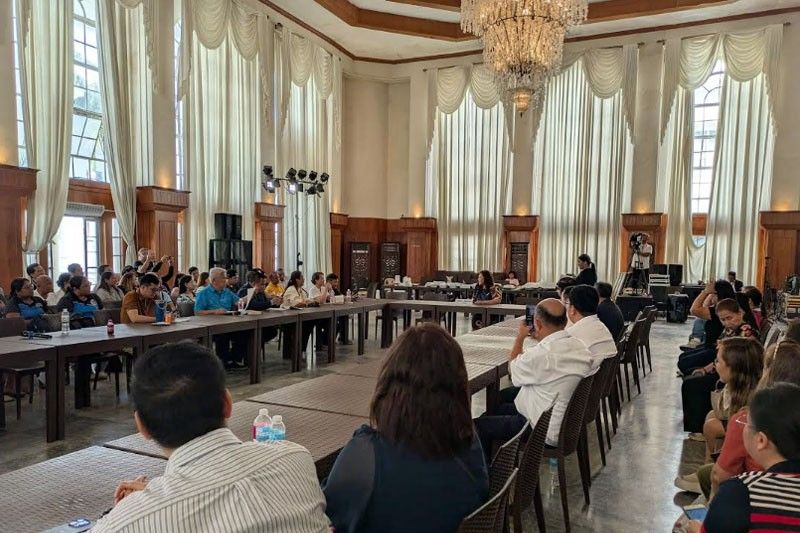
CEBU, Philippines — Coming from the other side of the coin, the Cebu Provincial Government convened a “Stakeholders’ Consultation on EV Taxi Implementation” yesterday to address mounting concerns over the allocation of additional taxi slots for electric vehicles here in Cebu.
Cebu Governor Pamela Baricuatro, presiding over the meeting, emphasized the need to carefully evaluate the potential impact of EV taxis on traffic, public convenience, and local taxi operations.
“Kung makaayo ba ni sa Probinsiya, ang kani’ng EV taxi considering nga grabi ang atong traffic situation diri. Dili lang kay kaliton sila’g impose nga naa’y mosulod nga EV taxi,” she said,
Representatives from the Land Transportation Franchising and Regulatory Board (LTFRB), electric vehicle operator Green & Smart Mobility (GSM), and the League of Municipalities of the Philippines (LMP) Cebu Chapter, led by Cordova Mayor Cesar “Didoy” Suan, attended the consultation.
Also present were members of the Sangguniang Panlalawigan, including Board Members Nilo Seno, Julius Anthony Corominas, and Stanley Caminero, Cebu City Councilor Dave Tumulak, and other concerned officials.
The session comes ahead of GSM’s pending application for a Certificate of Public Convenience scheduled for an LTFRB hearing on January 15 at 10 A.M.
Taxi operators, particularly the United Cebu Taxi Operators Association Inc. (UCTOA) and several veteran local operators, voiced strong opposition to GSM’s entry, citing unfair advantages and potential harm to their long-standing businesses.
During the hearing, Jaycel Sato, owner of Ken Taxi, operating for more than 30 years, said it was difficult for them to get a franchise from the LTFRB, but GSM easily secured theirs.
“That’s so unfair, 30 years of doing business, walay gilabanan ang LTFRB,” she lamented.
Rey Gealon, representing UCTOA, said GSM was able to enter the local market despite the LTFRB’s circular issued, raising questions of procedural fairness.
Oppositors, including Richard Cabucos (Richielda Taxi), Chiquito Obeso (King Spider Taxi), Airland Taxi Corp., and Scorpion Taxi Corp., argued that the addition of 600 GSM units would negatively affect their operations and worsen traffic congestion.
“In Metro Cebu, there are already enough taxi units. Adding 600 more will further exacerbate traffic and inconvenience the riding public,” their opposition paper read.
They further cited the Electric Vehicle Industry Development Act (R.A. 11697), arguing that GSM’s single-operator entry could constitute undue discrimination against long-time operators.
The provincial government shared findings from a 2019 study by the Japan International Cooperation Agency, which underscored worsening traffic conditions in Metro Cebu due to population growth, increased motorization, and insufficient road infrastructure.
According to the study, Cebu City generates and attracts approximately 3.528 million trips per day, ranking first in the region for both trip generation and attraction.
Around 60% of Metro Cebu’s population relies on public transportation, yet only 10% of vehicles on the road serve public transport needs.
The study estimated economic losses of ?1.1 billion due to traffic congestion.
With this, Assistant Provincial Administrator Aldwin Empaces stressed the importance of a long-term transportation roadmap for the province.
“So, moving forward, if you want a long-term direction, you need a long-term plan. The policy should be guided by a vision: Where do you want to go? What’s the direction of transportation in Cebu?” Empaces said.
He added that the council’s role is to prioritize moving people efficiently rather than simply adding more vehicles to the road. The first council meeting is set for the first week of February.
Caminero highlighted that EV adoption should be coupled with a reduction in fossil-fuel vehicles.
“Ang major aspect sa pag welcome sa EV, dili man lang na modugang ta’g electric vehicles kon dili duna siyay parallel na pag-lessen sa mga fossil-based vehicle,” Caminero said.
Caminero also urged national government agencies to coordinate with provincial authorities to review plans, policies, and projects before implementation.
GSM representatives, including the company’s Vietnamese owner, defended their application, stressing that their goal isn’t competition but to provide environmentally-friendly transportation options.
Baricuatro acknowledged the operators’ concerns but clarified that the provincial government is not against EV taxis.
“Of course not," said Baricuatro.
"Na-surprise lang ko on my part nga daghan nag EV diri pero wa pay charging station. We just want to ask the question: Who will manage these stations, and will they be compatible with all EV suppliers?” she asked.
The consultation underscored the challenges of balancing innovation, environmental concerns, and the livelihood of long-time taxi operators in Metro Cebu.
Baricuatro directed that a comprehensive information roadmap be developed in the first quarter to guide decisions on EV taxi deployment.
Cebu transport council formed
The Cebu Provincial Government also announced the formation of the first Cebu Transport Council, tasked with setting the long-term direction of transportation across the island.
Empaces said the council will coordinate policies, including EV deployment, commuter safety, employment, and public service efficiency.
“The Cebu Transport Council will be the one setting the direction for transportation in Cebu. It’s not just about moving more cars; it’s about moving more Cebuanos,” Empaces said.
The council will meet in early February and work closely with LTFRB to reconcile EV franchise and operational concerns.
Empaces stressed that the council’s approach will be inclusive, collaborative, and data-driven, ensuring sustainable transport solutions that benefit both operators and the commuting public. — (FREEMAN)


- Latest


