Investigative reporters share experience, tricks of the trade
CEBU, Philippines — Coming up with an investigative piece is one thing, but to publish one in fine print requires a long list of data-gathering processes that comes with more than just unveiling a problem dressed in courage and providing a resolution.
This was highlighted during the Juan Mercado Memorial Lecture organized by STET-Women in Cebu at the Seda Ayala yesterday, as part of the 33rd Cebu Press Freedom Week celebration.
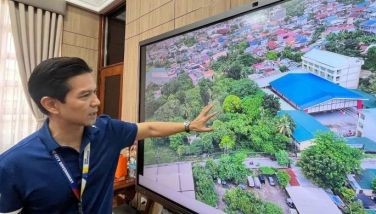
Rappler multimedia reporter John Sitchon shared his data-gathering process in writing the story “The Road to Royina Garma’s Den”, while multi-awarded journalist Cherry Ann Lim offered comprehensive insights and tips on writing special reports, which were also compiled in an e-book launched during the forum.
During his presentation, Sitchon narrated the data-gathering process he had taken, which he added took him eight months to finish, and what he admitted was a “very risky” venture — “The Road to Royina Garma’s Den.” The narrative began when Sitchon journeyed out to track down a “hilltop” property of Garma, a retired police officer and government official, who served as Cebu City Police Office chief under former president Rodrigo Duterte.
This report, according to Sitchon, came to light after Garma was investigated by the quad committee of the House of Representatives when she was entangled in the bloody drug war of Duterte. While essentially outlining the heavily reported role of Garma in the drug war, Sitchon uncovered a portion which he added could get him “shot or even killed.”
While this may seem a repercussion he overcame, Sitchon said this endeavor was anchored on the victims of the drug war and rooted in testimonies he got to write. Upon receiving a tip that there is this specific “mansion” Garma owns that sits on a hill in Cebu City, to which Garma also admitted, Sitchon began investigating.
Looking back, Sitchon found it difficult to traverse the outskirts of the Transcentral Highway. To avoid attracting suspicion, he recalled coming over on a motorcycle, with no media identification and no uniform just to ensure safety.
“This is one of the risks that you have to take as investigative journalists,” said Sitchon.
While the investigation eventually led to the discovery of the hilltop property of Garma, Sitchon, who emphasized the importance of verification in investigative journalism, further discovered that this property sits in the Central Cebu Protected Landscape.
More than the people’s narratives, Sitchon highlighted that he personally visited concerned offices, namely the Registry of Deeds and City Hall, to fully verify the ownership. He added the area hasn’t been registered under a name.
“The more I ask, the more people will start listening,” said Sitchon.
Sitchon also utilized AI, aiding him in coming up with other alternative ways of summing up his story that comes with layers of verification.
Meanwhile, Lim, known for her award-winning special reports, delivered comprehensive lists in coming up with a good investigative piece, to which she admitted may not be a “rocket science” but requires more time, research, and more interviews.
“A special report is a thorough and longer format,” Lim said.
She said it covers a wide array of conflicts and problems such as social issues, corruption, violence, and abuse of power that comes with more depth and context.
While it comes with the tendency of “putting readers to sleep,” Lim shared some of the insights to avoid this.
She said it helps to give your story a gasp factor; using “killer” or defining quotes, offering something new, asking the hard questions, challenging the conventional wisdom or the generally-accepted beliefs or theories, getting the numbers, and putting a human face to the problem.
On humanizing the story, Lim highlighted that one of her special reports revealed that among the top reasons why elementary students aren’t in school is because of lack of interest, instead of poverty and shortage of classrooms.
She recalled the case of a 10-year-old who repeatedly cut classes to see her mother in Carbon Market daily from Mandaue City, who was already with another family --essentially an abandonment. Instead of going to school, she walked five kilometers just to see her mother while the father was still abroad.
In coming up with a good special report, Lim also shared guide questions to begin with, starting with: What is the problem? Have laws been passed to prevent this problem? What is the scale of the problem? Who caused the problem? Who was supposed to prevent this problem from happening? How were they supposed to prevent this problem from happening? So why was the problem not prevented? Who will be held accountable for this problem? How will they be held accountable for this problem? And what can be done to prevent this problem from happening again?
The event was attended by students, educators, and other media practitioners. It was concluded with a forum where participants were given the chance to ask questions.


- Latest