AI-driven ‘living intelligence’ set to revolutionize robotics
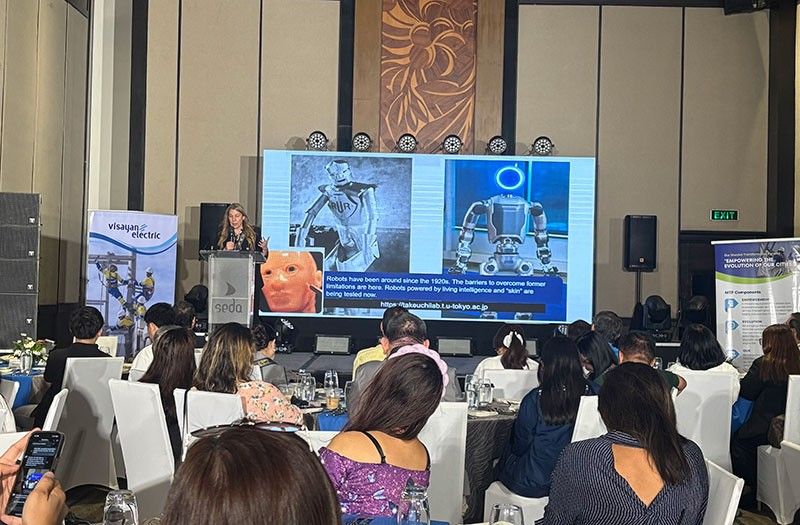
CEBU, Philippines — The rapid advance of artificial intelligence (AI) is ushering in “living intelligence” systems that could enable robots to learn and adapt more like humans, marking a sharp break from the rigid automation of previous decades.
Speaking at the recently held “Innovate Cebu” forum, InnovationForce CEO and founder Kimberly Getgen said improvements in neural computing and sensor technologies are giving rise to prototypes capable of human-like reactions and physical responsiveness.
“Robotics have historically been limited to predictable environments,” she said. “That’s changing as AI and neuron-based systems allow robots to adapt in ways that closely resemble human behavior.”
But Getgen warned that the most immediate challenge lies not in future breakthroughs, but in the resilience of the energy systems needed to support them.
She pointed to increasing pressure on electric grids due to climate-driven wildfires, extreme weather and aging infrastructure.
“The grid that powers our homes, businesses, and soon, large-scale AI systems, is already strained,” she said. “These pressures are happening now, not decades from now, and they are more urgent than any long-term trend.”
InnovationForce recently reviewed 6,000 infrastructure and energy-related operational challenges worldwide, identifying climate resilience, modernization of aging systems, rising power demand and affordability as top priorities for utilities and governments.
The company partners with corporations and public agencies to surface near-term operational problems and connect them with innovators developing practical solutions. “We help innovators find a North Star—problems that are real, present and solvable,” Getgen said.
She added that global entrepreneurship is expected to expand significantly, with more than 1 billion people projected to be engaged in entrepreneurial activity by 2030.
“The next era of problem-solving will be driven by human ingenuity,” she said. “Everyone innovates. The question is whether we direct that capability toward the challenges most critical to the planet and society.”





- Latest