City maps wells, taps private water sources
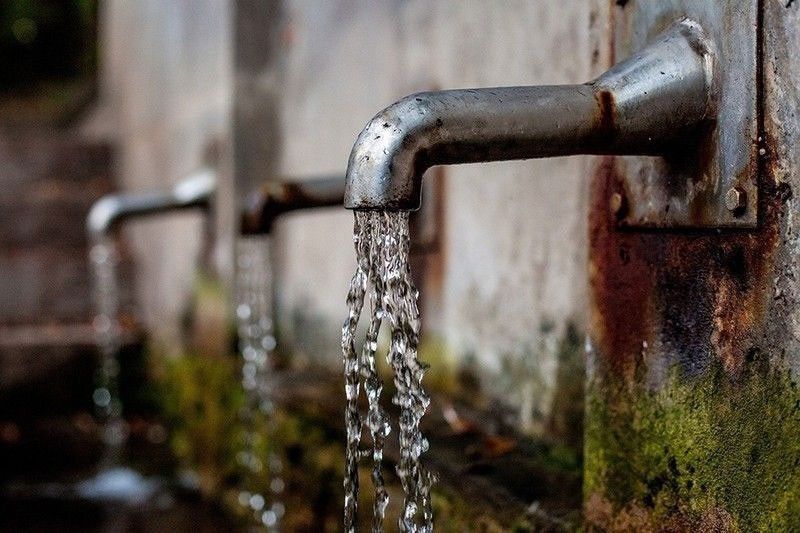
CEBU, Philippines — As part of the Cebu City’s immediate response to El Niño, the city government is prioritizing the mapping of artesian wells in every barangay, repair of damaged water facilities, tapping of private wells for public use, and preparation of school water tanks as emergency reserves.
During a follow-through meeting after the recent summit, the city’s preparedness team also directed the identification of suppliers with excess capacity and alternative water sources to augment the Metro Cebu Water District’s (MCWD) supply, particularly in northern barangays such as Lusaran, Cambinocot, Budlaan, Agsungot, Pulangbato, Guba and Malubog.
The meeting marked the shift from planning to implementation, with immediate measures including a review of emergency water equipment, updating of contingency plans, and the rollout of conservation campaigns to promote responsible water use and reuse.
Medium-term measures include rehabilitating wells, expanding storage capacity, installing elevated tanks and pumps, and improving irrigation and distribution systems.
Long-term strategies envision sustainable citywide water supply systems, larger reservoirs and impounding facilities, water recycling plants, and watershed rehabilitation.
PAGASA has warned that Central Visayas will continue to experience below-normal rainfall through early 2027, with an 81 percent chance of a strong El Niño persisting until midyear.
The conditions raise the risks of water scarcity, crop damage and prolonged dry spells.
MCWD has previously flagged a potential daily water deficit of 43,000 cubic meters if production from Buhisan Dam, the Cotcot and Lusaran rivers, and the Jaclupan facility continues to decline.
The implementation of the water resource plan will require coordination among the Mayor’s Office, Department of Public Services, Department of Engineering and Public Works, MCWD, National Irrigation Administration, Cebu City Disaster Risk Reduction and Management Office, City Health Department/Department of Health, Bureau of Fire Protection, City Planning and Development Office, Local School Board, Visayan Electric Co., and the barangays.
Rainwater code
Meanwhile, national regulators have reminded Cebu City that its proposed Rainwater Retention, Harvesting and Reuse Code, as well as its endorsement of dam projects along major rivers, must comply with national water and environmental laws.
The responses, prompted by formal requests from the City Council, combined regulatory reminders with assurances of support.
The National Water Resources Board (NWRB), in a letter dated September 9, 2026, acknowledged receipt of Resolution No. 17-0397-2026, which directs a comprehensive review of Ordinance No. 2103 and the drafting of a Rainwater Code.
The Council had asked the NWRB to participate in the review to ensure consistency with national standards.
The NWRB said it “interposes no objection” to the city’s plan but emphasized that rainwater is legally considered property of the State under Presidential Decree No. 1067, or the Water Code of the Philippines.
Its appropriation and utilization generally require a water permit, except for family domestic use.
The Board cited Articles 5(d), 6(c) and 13 of the Water Code and reminded the city that Water Permit Applications must comply with documentary and technical requirements under Board Resolution No. 09-0916, which revised Sections 5 to 14 of the implementing rules and regulations.
These requirements include engineering plans, environmental clearances and proof of beneficial use.
The Board requested that a copy of the Rainwater Code be furnished upon completion and assured the Council of its commitment to coordinate with Cebu City to ensure that local policies on rainwater harvesting, retention and reuse are consistent with national law.
Resolution No. 17-0397-2026, approved unanimously on August 4, 2026, mandates city offices, including the Office of the Building Official, Department of Engineering and Public Works, City Planning and Development Office, Disaster Risk Reduction and Management Office, and Environment and Natural Resources Office, to conduct a 60-day review.
The measure envisions rainwater not merely as runoff but as a resource to be retained, harvested, reused and infiltrated, and integrated into climate resilience and flood-control planning.
Dam projects
The Environmental Management Bureau (EMB) Region 7, in its September 16, 2026 response to a separate resolution, also reminded the Council that dam and water-impounding projects along Cebu’s major rivers fall under the Philippine Environmental Impact Statement (EIS) System pursuant to P.D. 1586.
The EMB cited Memorandum Circular No. 2014-005, which sets project thresholds.
Dams with reservoirs exceeding 25 hectares or 20 million cubic meters are classified as environmentally critical projects requiring a full Environmental Impact Statement.
Projects between five and 25 hectares or five to 20 million cubic meters also require an EIS, while smaller projects may be covered by an Initial Environmental Examination checklist.
The EMB stressed that projects located in environmentally critical areas must secure an Environmental Compliance Certificate (ECC), regardless of size.
The bureau also clarified that projects with multiple components, including associated facilities or support infrastructure, must be screened as a whole rather than piecemeal to ensure proper evaluation.
The EMB also assured the Council of its commitment to supporting sustainable water resource development while enforcing environmental safeguards. — (FREEMAN)



- Latest