After floods, haze blankets Metro
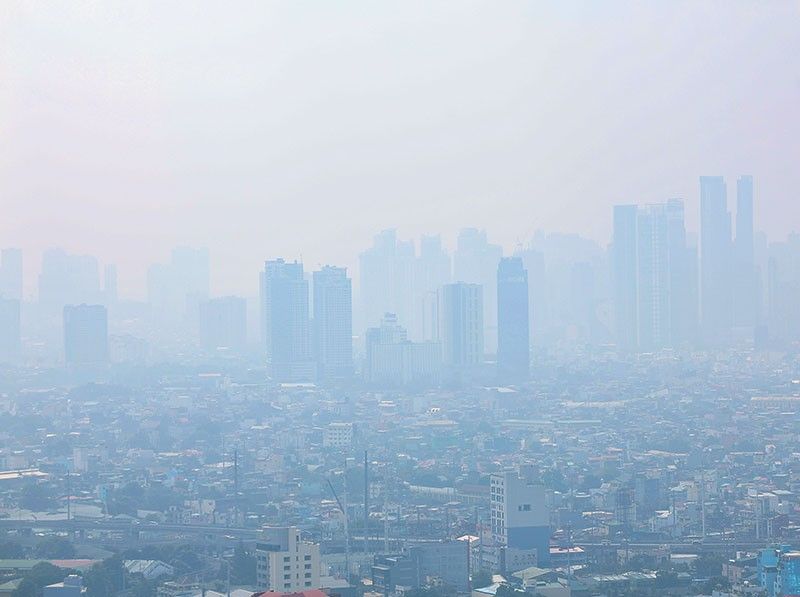
MANILA, Philippines — With Metro Manila and nearby provinces still grappling with flooding, thick haze has blanketed large swaths of Luzon and the Visayas.
Air quality in parts of Luzon and the Visayas reached “very unhealthy” levels yesterday as haze from forest fires in Indonesia spread all the way to the Philippines.
Based on monitoring by the Department of Environment and Natural Resources, particulate matter (PM 2.5) levels in Makati, Navotas, Pateros and Quezon City reached “very unhealthy” levels while the rest of Metro Manila recorded “acutely unhealthy” levels.
Central Luzon, Southern Luzon and the Bicol Region were also affected.
University of the Philippines-Diliman Institute of Environmental Science and Meteorology professor Gerry Bagtasa attributed the haze to forest fires in Indonesia, with smoke being carried toward the Philippines by strong winds.
“What is surprising is that the wind is strong. Typically, local emissions, when the wind is strong, they get carried away by wind. So, we are not experiencing haze episodes. So, obviously, the haze episode is not about local emissions,” Bagtasa told The STAR.
“When we look at the satellite, you can immediately see the haze because the sea is a bit black,” he added.
The haze also reached Cebu, where the University of the Philippines-Cebu recorded an Air Quality Index of 152 as of Tuesday, indicating “unhealthy” air quality.
Bagtasa said the haze may persist until Friday or Saturday as tropical cyclones continue to pull the southwest monsoon, along with smoke from the fires in Indonesia, toward the Philippines.
The haze became more evident after rains stopped, Bagtasa added, as the rain had previously helped clear particulates from the air.
Due to the unhealthy air quality, several schools adopted alternative learning arrangements.
The Quezon City government suspended face-to-face classes in public schools, covering child development centers, kindergarten, Grades 1 to 12 and the Alternative Learning System.
Ateneo de Manila University and New Era University also suspended in-person classes and shifted to remote learning following the Quezon City government advisory.
Local government officials and the Department of Health advised the public to wear masks, preferably N95 masks, and limit outdoor activities, particularly strenuous exercise.
People with respiratory or cardiovascular conditions, as well as children and the elderly, were advised to take extra precautions and stay indoors as much as possible.
The DOH also advised motorists to use headlights or fog lights, particularly at night, and urged residents to keep doors and windows closed to limit exposure to the haze. — Rhodina Villanueva, Janvic Mateo, Mark Ernest Villeza, Bella Cariaso


- Latest
- Trending