


UP study reveals West Philippine Sea marine value
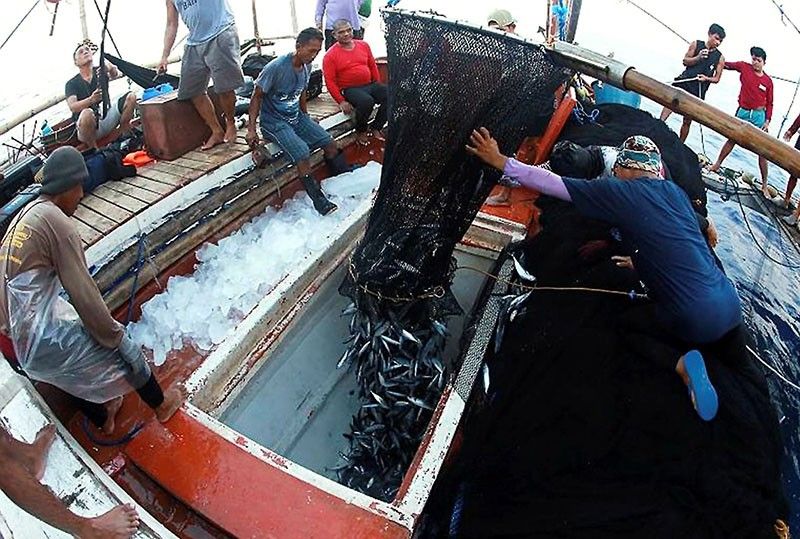
MANILA, Philippines — How can the government better maximize and protect marine ecosystems in the West Philippine Sea if it does not know the full extent of resources available in the contested waters?
From 2022 to 2025, researchers from the University of the Philippines Los Baños (UPLB) have been trying to answer that question by determining the scientific and economic value of the West Philippine Sea, a maritime territory well-entrenched in the minds of Filipinos as a symbol of national sovereignty in the face of outside aggression.
The endeavor, titled “Resource Inventory, Valuation and Policy in Ecosystem Services under Threat (Re-INVEST): The Case for the West Philippine Sea,” is funded by the Department of Science and Technology-Philippine Council for Agriculture, Aquatic and Natural Resources Research and Development.
It consists of three components: Project 1 focuses on resource assessment, Project 2 on resource valuation and Project 3 on policy analysis and development.
The completion of Projects 1 and 2 revealed that coral reefs declined by 10.5 percent from 2015 to 2020, while seaweed decreased by 8.1 percent and seagrass by 6.5 percent.
During the same period, however, mangrove forests expanded by 6,001 hectares, or 30.6 percent, while open water increased by 23,866 hectares, or 0.6 percent.
The decline in coral reefs left hard coral cover at “low” levels in four of six surveyed sites, including the Kalayaan Island Group, signaling deteriorating underwater ecosystems as fish lose their habitats and coastal communities become more vulnerable to ocean hazards.
Despite the expansion of mangroves, researchers said they still provide only limited coastal protection.
“These are not just mere scientific findings, but actually something that should trigger policy action as well,” Asa Jose Sajise, one of the team leaders of Project 2 of Re-INVEST and an economics professor at UPLB, said at the 48th Annual Scientific Meeting of the National Academy of Science and Technology, the highest scientific advisory body of the country.
Wealth in the sea
The study also highlighted the economic value of marine ecosystems.
According to the researchers, fish species dependent on open-sea and seagrass habitats have an estimated value of P1.58 billion, benefiting municipal fisheries.
Mangroves, meanwhile, provide an estimated P25 billion in carbon sequestration services and P91 million in coastal protection benefits to households in Pangasinan, Zambales, Bataan, Palawan and the provinces of Oriental and Occidental Mindoro. They also help mitigate climate change, support local food security and provide recreational opportunities.
Moving forward
To strengthen marine resource management in the future, Sajise said the government should develop localized valuation guides for critical ecosystem services, invest in satellite remote sensing technologies and accelerate the creation of monetary and ecosystem asset accounts to better monitor marine resources in the West Philippine Sea.


- Latest
- Trending


