DepEd-7: Schools ‘in good shape’ but 10K classrooms need repair
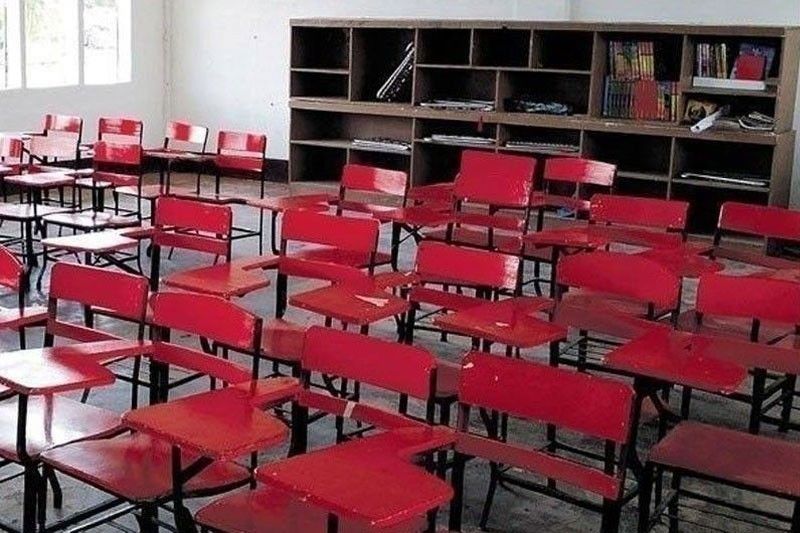
CEBU, Philippines — Despite admitting that around 10,000 classrooms in Central Visayas still need repair, officials of the Department of Education in Central Visayas (DepEd-7) said the opening of classes yesterday was generally “in good shape.”
Quoting DepEd-7 Regional Director Arturo Bayocot, spokesperson Amaryllis Villarmia said, “We are in good shape. Generally, our schools are ready based on the Brigada Eskwela turnout. All students are contained in classrooms and there have been Learning Continuity Spaces (LCS) constructed especially in areas that were hit by the earthquake like Bogo.”
Villarmia said around 10,000 classrooms still require repair, with 8,000 of these located in Cebu Province and its component cities.
Villarmia clarified that the figure is a consolidated total from previous years and includes damage caused by both earthquakes and typhoons.
She said the data does not refer to a single year of damage but represents accumulated classroom repair needs identified over time, including those affected by the Cebu earthquake.
Villarmia said many affected classrooms remain under repair, while others that sustained severe damage have already been classified as condemned and can no longer be used.
However, she noted that several units only require minor repairs and are gradually being restored and made usable again within the year.
She added that the 10,000-classroom figure has yet to be fully segregated into categories such as major repairs, minor repairs, or condemned units, as validation and monitoring are still ongoing.
“When we say major repairs, these refer to classrooms with extensive damage,” Villarmia said, clarifying that the count refers to classroom units rather than entire school buildings.
According to Villarmia, repair and construction efforts are being implemented through three channels: DepEd-initiated projects, Department of Public Works and Highways (DPWH) programs, and local government unit (LGU) initiatives.
For DepEd-funded minor repairs, she said the budget is downloaded directly to schools through the Maintenance and Other Operating Expenses (MOOE), while LGUs handle some construction and rehabilitation projects.
Villarmia also confirmed that some projects are already ongoing while others are still awaiting budget downloads from the central office.
“As of the moment, we cannot yet provide complete segregated data because monitoring and validation are still being conducted,” she said.
She added that repairs and construction are being implemented on a per-project basis, with continuous coordination among implementing agencies.
DepEd-7 Education Support Services Division chief Tomas Pastor said the department is closely monitoring affected schools and assessing whether all can fully implement face-to-face classes or if other learning modalities may still be necessary.
“Ang katung mga schools nato nga affected by the earthquake, so far dili full ang atong face-to-face. Ang uban ato naa pa tay shifting ana because naa pa tay mga buildings nga until now wala pa gyud na fully repaired,” Pastor said.
He said appropriate interventions are being implemented to ensure learning will not be disrupted while repair and rehabilitation works continue.
Some principals continue to implement shifting schedules to accommodate students in available classrooms. Pastor said schools in Region 7 generally enforce two shifts — morning and afternoon classes.
“I have heard nga naa pay mga moabot og three shifts pero so far sa atoang assessment karon, wala nata nisulod anang three shifts,” Pastor said.
Schools have adopted morning and afternoon onsite class shifting arrangements to address the impact on learners who cannot fully attend traditional classes.
“For example, naa na siyay kinahanglan duha lang ka classroom i-repair, possible mag-adjust na siya sa number of learners in a classroom or kung dako-dako ang iyahang need, pwede na nato i-shift into two shifts, morning and afternoon,” Pastor explained.
Although some schools can implement shifting schedules, Pastor pointed out that others still need additional classrooms to fully accommodate learners.
Alternative Delivery Mode (ADM) programs are likewise being implemented, allowing students to learn at their own pace using printed self-learning modules.
Officials reiterated that schools affected by earthquakes and typhoons continue to utilize the ADM approach to ensure students can continue learning while staying in their homes.
“Ang mga bata bisag tua sa ilang kaugalingong balay naa gihapon sila’y makat-unan unya i-check mana sa atong mga teachers as to kung asa sila nga level,” Pastor said.
DepEd-7 assured the public that blended learning would not negatively affect students, saying adjustments have been made to prioritize essential competencies. DepEd-7 also called on the general public, parents, and stakeholders to continue enrolling students, assuring that all learners seeking education will be accommodated as classes resume.
Meanwhile, Cebu City Mayor Nestor Archival marked the opening of classes by urging young learners to embrace cleanliness and reminding them that schools must serve as role models for the wider community.
Archival first visited Talamban Elementary School where, like a classroom teacher, he emphasized the importance of cleanliness and respect.
“Cleanliness is next to… godliness. Kon ang mga bata ug lugar limpyo, ang mga bata ug pamilya limpyo… duol sa Ginoo,” Archival said.
He further explained that proper waste disposal is vital not only for school surroundings but also for public health and safety.
“If you throw garbage in the school area or floor, makadaot na sa mga kauban nato. Mga plastic masud sa kanal, ang resulta, maka-cause ug flooding. Ug magbaha, maapektuhan ang mga estudyante kay inig usbaw sa tubig nga hugaw, masakit, dili maayo diba?” he said.
Archival appealed to students to keep candy wrappers and other waste inside their bags until they can properly dispose of them.
He also encouraged learners to use personal tumblers to reduce plastic waste.
The mayor also lauded the school for maintaining cleanliness and expressed excitement over its planned Materials Recovery Facility (MRF).
“Nalipay kayo ko niana kay ang tumong sa atong gobyerno, nagdamgo nga ang atong syudad malimpyo. Gikan sa mga eskwelahan, mahimong model sa kalimpyo sa atong syudad,” he said.
Archival also visited several other public schools, including Zapatera Elementary School, Lorega San Miguel campus, and Guadalupe Elementary School, where he likewise distributed school supplies and installed bins for collecting PET bottles to support recycling efforts.
While distributing the school bags and supplies, Archival urged students to help keep the city clean beginning in their respective schools.
“Naa koy hangyo ninyo… atong limpyuhon ang atong eskwelahan. Kaning tanang mga papel, dahon, ato ning ibutang sa usa ka lugar. Tudluan nato ang mga bata ug segregation aron makahibalo sila unsaon pag-atiman nato ang atong eskwelahan nga maanindot ug hapsay,” Archival said.
School heads from two public central schools in Minglanilla Districts I and II expressed confidence that the transition from the four-quarter system to a trimester academic calendar will help address learners’ long-standing reading difficulties.
The new calendar officially took effect Monday, June 8, with School Year 2026–2027 opening under a three-term system designed to maximize instructional days and reduce disruptions from non-academic activities.
Minglanilla I District Supervisor and Minglanilla Central Elementary School principal Viurina B. Baguio said the trimester setup would be more effective than the previous four-quarter scheme if strictly implemented, particularly by minimizing teacher pullouts for trainings and seminars.
She noted that frequent interruptions in the past affected classroom instruction.
“If we will strictly follow the schedule, number one nga ma-solve kay ang reading, the perennial problem that kept on repeating every year,” Baguio said.
She added that wellness breaks at the end of each term will give both teachers and learners time to rest and recharge. For teachers, the breaks will also allow computation of grades and preparation for the next term. Orientation sessions and Parent-Teacher Association (PTA) meetings will be conducted to help parents understand the transition and its potential benefits.
Meanwhile, Lipata Central Elementary School (LCES) Acting School Head Charisse Unabia said the school expects at least 2,500 enrollees, including transferees, this school year. She welcomed the revised calendar, saying it would allow students to focus more on lessons since instructional days are clearly separated from non-academic activities.
Unabia also cited adjustments to the grading system, particularly in percentage distribution for computing grades. LCES currently has 80 teachers, but she admitted the number remains insufficient for the growing student population.
“Dili jud enough,” she said. — Meriane Katherine T. Espina Michaela Tabar Marjorey Cantilla CNU Interns (FREEMAN)


- Latest