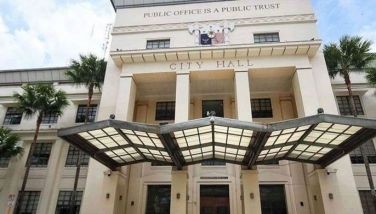


Council backs call for tax relief, postpones revenue code talks
CEBU, Philippines — The Cebu City Council has thrown its weight behind calls for "Tax Relax" rather than increased tax rates by postponing deliberations on the proposed Local Revenue Code for at least a year and subjecting it to further consultations and an economic review before moving forward.
The Council's action effectively aligns the legislative body with growing calls from business groups and other stakeholders who have urged City Hall to slow down a measure that could significantly revise local taxes, fees and charges amid persistent economic pressures.
Under the approved motion, deliberations on the proposed Revenue Code will be referred back to the committees on Budget and Finance and Laws for further stakeholder consultations and the preparation of a comprehensive assessment of its impact on micro, small and medium enterprises (MSMEs) and ordinary taxpayers.
The motion also seeks to defer the passage and implementation of the proposed code for one year or for a period to be determined by the Council.
In a privilege speech during its latest regular session, Councilor Joel Garganera said that while the city's revenue code needs updating, the present economic climate makes it the wrong time to impose additional burdens on residents and businesses.
"In public policy, we speak of what is called a policy window. It is a brief period when conditions align to make a proposed policy timely, appropriate, and likely to succeed," he said.
"I believe that for the proposed Local Revenue Code, the window is not open,” he added.
He cited inflation, rising fuel and commodity prices, recent disasters, power interruptions and warnings of a severe El Niño phenomenon as reasons for caution.
"Everything seems to be rising these days: temperature, prices, the dollar exchange rate, the cost of living," Garganera said.
"And then came the proposal: The Proposed 2026 Local Revenue Code of Cebu City. An increase which ordinary Cebuanos never asked for,” he added.
The councilor stressed that the issue is not whether the Revenue Code should be updated but whether taxpayers can absorb higher costs at the present time.
"Our Local Revenue Code needs updating. I understand that as the city grows bigger, the reach of our services must expand too. More importantly, it has to keep up with the times. But that raises a question we must answer honestly: is this the appropriate time to do it?" he said.
The position taken by Garganera mirrors concerns recently raised by the Cebu Chamber of Commerce and Industry (CCCI), which has urged the city government to defer proposed increases in local taxes, fees and charges.
In a position paper, CCCI President Regan King said the business community recognizes the need for fiscal sustainability and the modernization of the city's revenue system but argued that the government must consider the capacity of businesses and residents to shoulder additional costs.
"Revenue generation cannot be pursued independently of the economic conditions of those expected to pay," the chamber said.
CCCI warned that businesses continue to face rising utility, logistics and operating costs, weak consumer spending and shrinking profit margins.
It said some enterprises are already struggling to survive and that additional taxes could force businesses to scale down operations, pass on costs to consumers or even close permanently.
The chamber likewise urged City Hall to focus on improving collection efficiency, fiscal accountability and public service delivery before increasing taxes.
These concerns were echoed in Garganera's speech.
According to the councilor, raising taxes does not affect businesses alone, as the eventual burden is often passed on to consumers.
Other City Hall officials earlier defended the proposed Revenue Code as part of efforts to modernize Cebu City's fiscal framework and strengthen local revenues needed to sustain government services and infrastructure programs.
During earlier budget deliberations, Emma Villarete, the officer-in-charge city treasurer, told councilors that the city's revenue projections were not solely dependent on the proposed Revenue Code but were also based on ongoing revenue-enhancement measures, improved collection efforts and the identification of previously undeclared or under-assessed properties.
The proposed measure has been pushed as part of the city's broader effort to strengthen revenues needed to support its growing service requirements and future spending plans.
Apart from opposition from business groups, the proposed Revenue Code has also drawn scrutiny from some taxpayers and stakeholders who have questioned specific provisions.
During a public hearing earlier this month, lawyer Cresencio Meneses, representing SM Investments Corporation and its affiliated entities in Cebu, urged the Council to revisit portions of the proposal, arguing that some provisions could exceed the limits prescribed under the Local Government Code.
Meneses specifically raised concerns over proposed changes to local business taxes, surcharge penalties and community taxes, warning that some adjustments could result in substantial increases for affected businesses.
The proposed Local Revenue Code has become one of the most closely watched measures before the Cebu City Council because it would replace the city's existing revenue framework, which officials said has not undergone major revisions since 1993. — (FREEMAN)








- Latest