Philippines developing options on vessel ramming by China
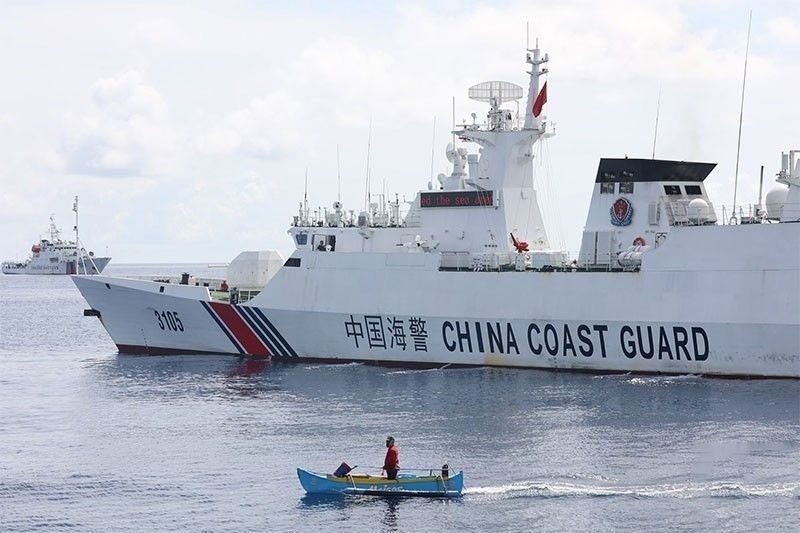
MANILA, Philippines — The Philippines is “developing options” to address the ramming of a Bureau of Fisheries and Aquatic Resources (BFAR) vessel by a China Coast Guard (CCG) ship last Friday off Palawan, Defense Secretary Gilbert Teodoro said.
“This definitely needs to be addressed and we’ll be talking with the National Security Adviser and the National Maritime Council,” Teodoro said in an interview on the sidelines of the ASEAN Defense Ministers’ Meeting-Plus Experts’ Working Group on Maritime Security’s Joint Cooperative Activity and Future Leaders’ Program in Olongapo City, Zambales on Monday.
“This is an unarmed vessel, a BFAR vessel. There’s no rhyme, no reason,” he said, referring to the BRP Datu Magat Salamat.
“It’s not merely a violation of maritime rules and regulations, but a criminal act by Chinese Coast Guard. So, we will be addressing that. I’m not going to talk about specifics now, but definitely… our personnel are already developing options for addressing this,” he said.
Asked about some Filipinos defending the CCG’s action against the BFAR vessel, Teodoro said “that is not acceptable, and a betrayal of the Republic of the Philippines.”
In an interview with “Storycon” on One News, Philippine Coast Guard spokesman for the West Philippine Sea Rear Admiral Jay Tarriela said it was the first recorded case of a Chinese ship deliberately ramming an unarmed civilian Philippine vessel.
“This is the first time that we have documented a China Coast Guard vessel aggressively ramming a government vessel from the Philippines that is unarmed, civilian and conducting a humanitarian mission,” Tarriela said.
“It is only 54 nautical miles from Palawan. That is what is surprising about this particular incident,” he said. “They were really caught by surprise. They were not prepared for this intentional ramming.”
He said it would be illogical for the smaller BFAR vessel to intentionally put itself in the path of a much larger Chinese ship.
“I do not think that vessel would intentionally ram itself because its ship is small compared with the Chinese vessel. It would sink,” he said.
Tarriela said he is not authorized to disclose details of any proposed government response but stressed he is in favor of strengthening the country’s maritime capabilities.
“What we need are more Coast Guard assets and more BFAR assets,” he said.
‘China wants new world media order’
In its latest “Propaganda Monitor” released on Monday, the Reporters Without Borders (RSF) meanwhile has warned of China’s worldwide campaign to shape the media to advance its political and economic interests.
The RSF said Chinese leader Xi Jinping has pursued since 2013 a “new world media order” designed to promote Beijing’s narrative while suppressing reporting that challenges the Chinese government.
The group says the campaign uses everything from media partnerships and foreign-language broadcasting to pursue its goals.
The RSF cited Beijing’s content-sharing deals with foreign broadcasters, funding and equipment for local newsrooms, recruitment of diaspora media, government-backed journalist training and fully funded trips to China.
It also pointed to Chinese embassies’ alleged efforts to discredit or intimidate journalists investigating Beijing’s influence – including cases in the Philippines.
The report also highlights the expanding role of Chinese state media like CGTN and Xinhua which operate in 160 countries. Chinese state-linked institutions, meanwhile, increasingly court YouTubers, TikTok creators and other influencers to reach younger audiences.
Beijing has also targeted independent and diaspora journalists overseas, including those in Uyghur as well as Hong Kong journalists based in the United States and the United Kingdom. With its arrest and detention of 120 news professionals, China can be considered the world’s leading jailer of journalists, according to RSF.
It also warned that China’s information strategy increasingly intersects with other authoritarian governments. Chinese state media organizations such as CGTN, for instance, have amplified material from Russian state outlets including RT and Sputnik, including coverage surrounding Russia’s full-scale invasion of Ukraine. Such cooperation could help authoritarian governments expand their influence over the global information environment, according to RSF. — Mark Ernest Villeza, Artemio Dumlao





- Latest
- Trending