


Residents told to stay indoors: Ashfall disrupts flights, classes
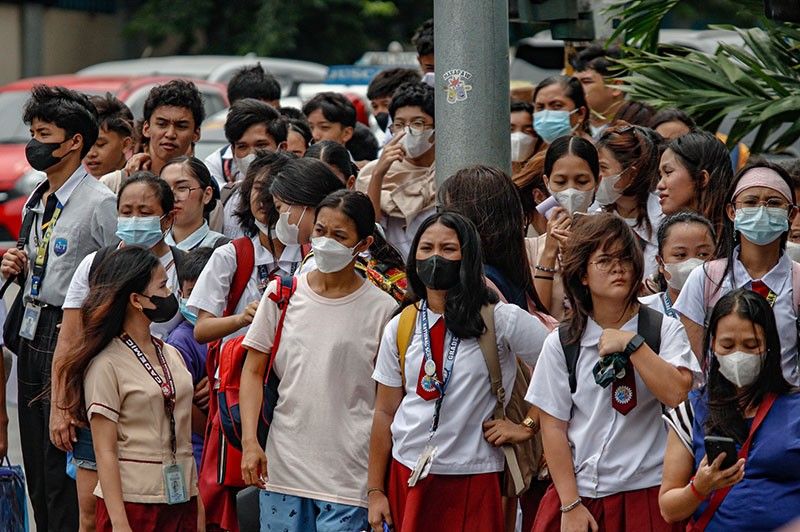
CEBU, Philippines — Face-to-face classes across several local government units in Cebu were suspended and at least 14 flights at the Mactan-Cebu International Airport (MCIA) were cancelled Thursday after volcanic ash from the moderately explosive eruption of Mt. Kanlaon blanketed parts of the province.
The cities of Cebu, Mandaue and Lapu-Lapu suspended classes as a precaution against the health risks posed by the ashfall, while Toledo City also suspended work in government offices.
Cebu City Mayor Nestor Archival ordered the suspension of classes at all levels in public and private schools until further notice.
“As a precautionary measure, and out of utmost concern for the health, safety, and welfare of our pupils and students, classes at all levels, both in public and private schools in Cebu City, are hereby suspended until further notice,” Archival said.
He urged residents to remain calm, stay indoors if ashfall intensifies and monitor only official advisories from the city government and concerned agencies.
Mandaue City and Lapu-Lapu City also suspended face-to-face classes, while emergency teams in Lapu-Lapu were placed on blue alert and distributed free face masks to residents.
At MCIA, 13 departing domestic flights and one arriving flight were cancelled after volcanic ash was detected within the airport vicinity, including its runways.
“For the safety of all aircraft and our passengers, runway clearing operations are ongoing as our ground crews conduct comprehensive safety inspection. Volcanic ash is highly abrasive and poses a severe risk to aircraft engines, exterior surfaces, and navigational instruments,” the airport management said.
The Mt. Kanlaon in Negros Occidental erupted at 7:33 a.m., producing a dark gray ash plume that rose two to three kilometers above summit crater before prevailing southwest monsoon winds, enhanced by Tropical Storm Inday (international name Bavi), carried the ash eastward across Negros Island and into Cebu and other parts of Central Visayas.
The Philippine Institute of Volcanology and Seismology (PHIVOLCS) maintained Alert Level 2 and reiterated that entry into the four-kilometer Permanent Danger Zone remains prohibited.
Officials from the Department of Science and Technology (DOST)-Philippine Atmospheric, Geophysical and Astronomical Services Administration (PAGASA) said the ashfall is expected to clear today if Kanlaon remains quiet.
During a virtual press conference, PAGASA Visayas chief Engr. Al Quiblat said trajectory modeling correctly projected the ash cloud to reach Cebu at around 11:30 a.m. before moving toward Leyte several hours later.
“Most likely, kung wala nang panibagong putok o eruption ng bulkan, sa tansya po namin bukas ay magiging clear na rin ang ashfall,” Quiblat said.
Quiblat said the wind did not trigger the eruption but determined where the volcanic ash would travel. PAGASA recorded southwest winds of about 50 kilometers per hour at its Mactan station, allowing the ash plume to reach Central Visayas within about two hours.
PHIVOLCS Volcano Monitoring and Eruption Prediction Division chief Mariton Antonia Bornas said reports from different parts of Cebu confirmed traces of volcanic ash and a strong sulfur smell.
She explained that the odor likely came from sulfur dioxide emitted directly by Kanlaon and should not be mistaken for volcanic smog or "vog."
“Sa ganitong sama ng panahon na wala namang masyadong sunlight, hindi natin inaasahan na magkakaroon ng volcanic smog o vog, dahil kailangan ay may solar radiation,” she said.
Bornas said the southwest monsoon, strengthened by Tropical Storm Inday, enabled the ash to travel farther than usual and warned that similar ashfall could again reach Cebu whenever Kanlaon erupts during the monsoon season.
She also cautioned that the recent series of moderately explosive eruptions indicates magma continues to accumulate beneath the volcano.
“This could happen next week, next month, or even next year. We cannot determine the exact timing, but these activities are signs that the volcano is moving toward that possibility,” Bornas said.
The ashfall prompted the Office of Civil Defense in Central Visayas to convene an emergency meeting of the Regional Disaster Risk Reduction and Management Council to coordinate government response and assess possible impacts on public health, transportation and work-related activities.
Health authorities urged residents to stay indoors whenever possible.
DOH-7 Regional Director Dr. Joshua Brillantes advised the public to avoid unnecessary outdoor activities and wear properly fitted N95 or KN95 face masks if they need to go outside.
“The health sector's advice is to avoid going outdoors as much as possible, especially for non-essential activities,” he said, adding, “Even if you are wearing a mask, there is still a possibility of inhaling the very fine ash particles if the mask is not properly fitted.”
The Environmental Management Bureau (EMB)-7 likewise warned that volcanic ash is expected to increase PM10 and total suspended particulate (TSP) concentrations, although monitoring stations have so far recorded levels within safety standards.
Engr. Arthur Niño Calupig, air quality monitoring expert of EMB-7, said volcanic ash differs from ordinary dust because it contains fine particles and volcanic materials that may pose health risks, particularly to people with respiratory illnesses.
“Unlike before when PM2.5 was the concern, this ashfall is likely to contribute more to PM10 and TSP," Calupig said.
He said EMB-7 has observed an upward trend in PM10 concentrations, but these remain within safe limits.
“In fact, the trend for PM10 is already an uptrend, but it is still within the safe limit. However, we expect concentrations to increase in the next few hours, especially for TSP," he said.
Calupig explained that higher PM10 and TSP levels mean more airborne particles that can affect human health, particularly individuals with asthma and other respiratory conditions.
He advised the public to wear protective face masks, avoid unnecessary outdoor exposure, and stay indoors whenever possible during ashfall events.
“Volcanic ash is not ordinary dust. It contains volcanic particles that can irritate the respiratory system and even the skin," he said.
EMB-7 is continuing to monitor air quality through its real-time stations for PM2.5 and PM10, while personnel have also been deployed to eastern Cebu to assess conditions on the ground. The agency's manual monitoring stations are also collecting 24-hour samples for TSP analysis.
Calupig said the duration of elevated particulate concentrations will depend on the continuing activity of Kanlaon Volcano and prevailing wind conditions.
“So long as volcanic activity continues, concentrations may continue to fluctuate depending on the direction of the wind and the amount of particles being emitted," he said. — Kristin de Dios/FPL (FREEMAN)


- Latest


