‘Magellan’: A voyage of discovery
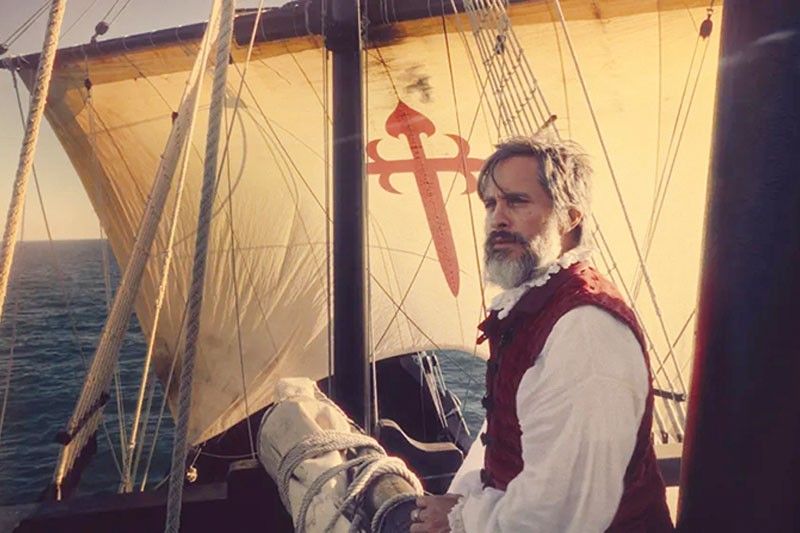
The greatest tragedy of “Magellan” (the 2025 movie, not the Portuguese explorer) is that very few Filipinos will see it, and even fewer will appreciate it. It is a tragedy shared by the good and the great of Filipino Cinema: their works wither and die in a cultural wasteland populated by slapstick, soft porn, toilet humor and the trite.
Director Lav Diaz’s latest opus is so far his highest-budgeted, most international film (it stars noted Mexican actor Gael García Bernal in the title role, and the dialogue is in Portuguese) and — for someone known for nine-hour movies — the shortest, with a running time of “only” two hours and 40 minutes. Nonetheless, it is still not for the average Filipino: its slow cinema approach (with its deliberate and contemplative pacing) and tableau vivant cinematography (where the camera is mostly static) do not lend themselves well to casual viewing: its dark noir theme, foreboding atmosphere and heavy anti-imperialist message are verily not for escapism.
Those initiated into slow cinema, however, will be rewarded for their patience with an experience that is both sublime and psychedelic, opening their minds to certain hypotheses hitherto unthought of even by those who are already familiar with Magellan’s life.
The first treat comes with the aforementioned tableau vivant style, actually the most primitive of film photography, harking back to Lumière Studio’s first films. In “Magellan,” Lav (who shares cinematography credits with the Catalan Artur Tort) makes very good use of the style to compose sequences of stunning beauty, every frame looking like a Dramatic Renaissance painting, very appropriate for the film’s period setting (1500s).

The movie starts in medias res, with a Malayan woman running in terror from the shore at the sight of Europeans. It was 1511, and Magellan was part of an expedition to conquer Malacca (now Malaysia). The next scene is that of a seashore littered with the dead bodies of both conquistadores and native warriors, showing the ugliness of colonial conquest early on.
In fact, the movie is both a deep introspective study of the titular character and an exposition of the malevolence of European colonialism. There are no “moments of glory” sequences here, no depiction of heroism on Magellan’s part. Au contraire, the protagonist is portrayed as a seriously flawed person whose motivation for the conquest of lands in the East Indies is primarily for money, with the “saving of souls” not his priority (“More wealth for us, halting the Muslim commerce, more Christian conversions, nullify Venice.”).
Magellan is shown not as the brave, risk-taking demigod of high school history books, but as someone who is not only very human but ruthless, scheming and downright remorseless. He gets an erection when his nurse (Beatriz, whom he eventually marries) gives his injured leg a massage; he treats simple insubordination as treason and strands those responsible on a desolate island; he tries to induce a priest to break the seal of the confessional. He tries to feign concern when the widows of those who died in the Malaccan campaign, all dressed in black mourning garb, meet him on a shore (in a scene chillingly reminiscent of an Ingmar Bergman movie), while showing indifference in the next scene to the fate of those whom he has led to their deaths.
It is a difficult movie to watch, replete as it is with gut-wrenching scenes. Natives of Malacca put into slavery in makeshift cages, crying mournfully for their gods to save them; women and children wailing as the colonizers put their native idols to the flame; the deglamorized scenes of conquistadors in their tattered clothes and diseased bodies trudging through the jungle: all these and many more will sear themselves into the viewers’ brains.
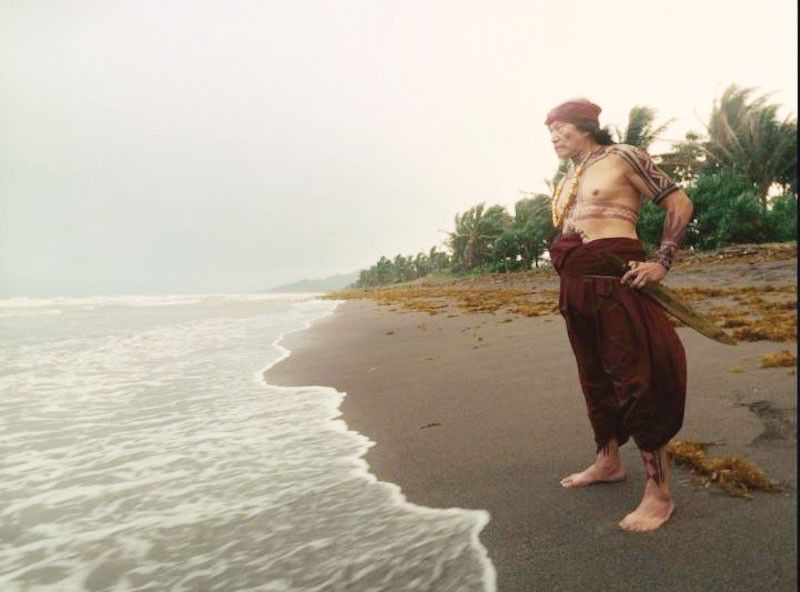
All of the tropes relating to the European arrival in Cebu are there: the blood compact, the conversion of Humabon, the planting of the first cross, and Enrique, the Malayan interpreter. What the typical moviegoer will look for, and not find, is the Battle of Mactan.
Instead, the movie puts forth what may be a controversial thesis: that Lapulapu was a myth propagated by Humabon, after he becomes incensed at the arrogance of the newcomers, to provoke Magellan to battle and then betray him by having Magellan ambushed by Humabon’s warriors.
The battle itself, though, was not shown as a set piece; rather, it starts by showing Visayan warriors rushing to the shore to defend their homes after Magellan’s ships start cannonading the settlements, and ends with a half-body shot of Magellan in full armor, lying dead on the shore.
The movie concludes with a sequence of local warriors celebrating by brandishing the severed head of one of Magellan’s crew.
“Magellan” is proof of what can be achieved by the Filipino filmmaker given enough talent, motivation and budget. It is world-class cinema standing as a beacon of hope in a sea of third-rate commercialized efforts.
Kudos must be given to local movie denizens such as Paul Soriano (an excellent director himself) who helped make “Magellan” possible. May such enterprises bear fruit to inspire more voyages of discovery into making outstanding Filipino films.
“Magellan” is now available for streaming in Prime Video.


- Latest
- Trending